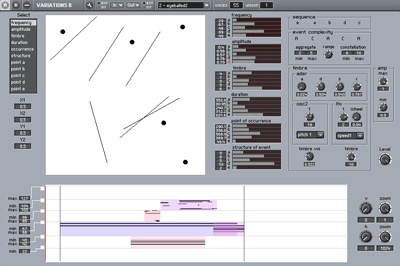
This is one of the possible ways to calculate the score of Variations II (John Cage)
The lines represent:
1 - frequency
2 - amplitude
3 - timbre
4 - duration
5 - point of occurrence in an established period of time
6 - structure of event
(single sound, aggregate or chords, and constellation)
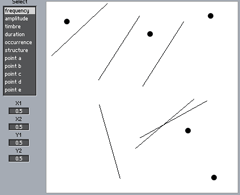
Parameters are determined by making perpendicular measurements
from the points to each lines.
A set of thirty measurements can be made from a single reading of
all the parameters.
You can move points and lines with the left mouse button
and rotate the lines with the right mouse button.
POINT OF OCCURRENCE:
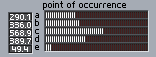
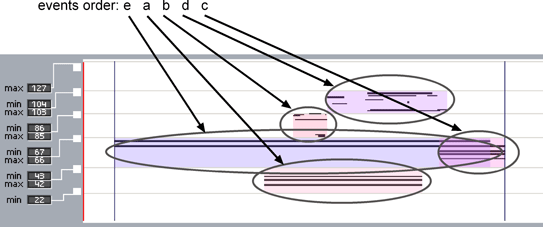
Values calculated from the point of occurrence are arranged
from the smallest to the largest and all
the other parameters
(freq, amplitude, timbre etc.) has
the same letters sequence.
e.g.: e a b d c

FREQUENCY:
Values are divided into six ranges of frequencies.
You can change each range by the six white squares.
STRUCTURE OF EVENT:
Different distances from this line can represent a single note,
or an aggregate (chord) or a constellation.
Constellation contains, many notes with different start, length and pitch inside the total values of duration, occurrence and frequency.
All notes are calculated randomly (cage used the I-ching)
The number of notes generated vary from 1 to a maximum of 10 in function of the distance from the point to this line.
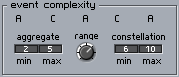
nomenclature:
S = single note
A = aggregate (or chord)
C = constellation
SEQUENCER:
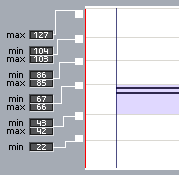
A special piano-roll sequencer is used to play the result of all calculations. The figure above illustrates the sequencer with the "event cells" generated by the five points.
free download (available also on-line at Ni user library )
BACK